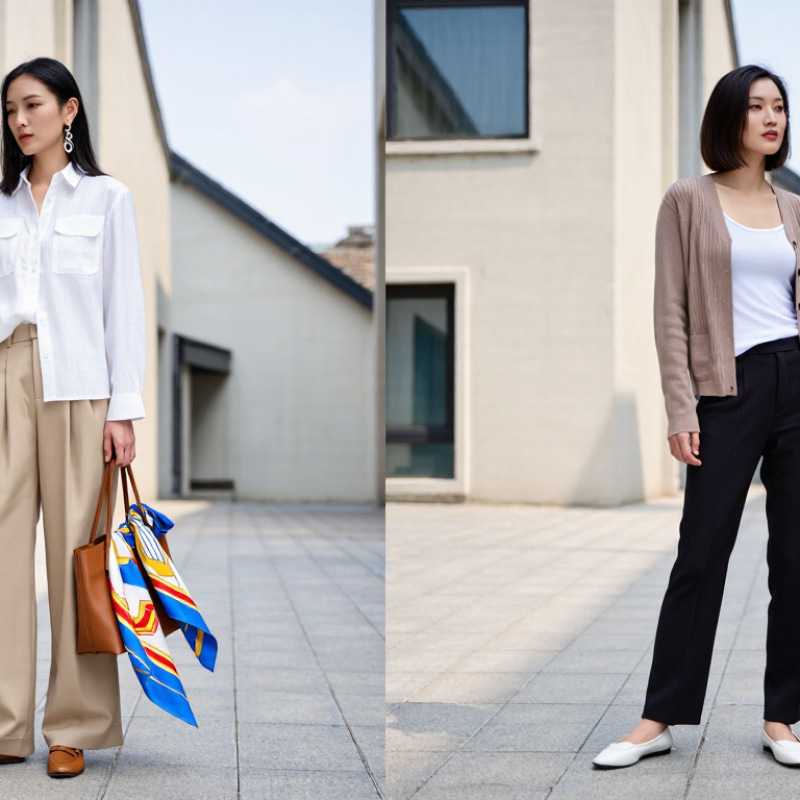
China Top Fashion Clothing Styling For Minimalist Wardrobes is changing how modern dressers define simplicity. In Shanghai, a streamlined wardrobe may include a structured linen shirt, wide-leg trousers, and comfortable leather loafers. In Shenzhen, lightweight cotton layers can handle humid commutes and sudden indoor air conditioning. Practical experience matters here. A beautiful outfit must also survive real movement, changing weather, and repeated washing.
Fashion Clothing Styling For Minimalist Wardrobes focuses on intentional choices, not empty closets. A neutral base can support one vivid silk scarf, sculptural earrings, or a carefully cut jacket. Proportion becomes essential. A cropped knit can balance high-waisted trousers, while an oversized coat may need slimmer footwear. Fashion designer Coco Chanel famously advised, “Before you leave the house, look in the mirror and take at least one thing off.” That principle still offers useful discipline, although it should not become a rigid rule.
This guide examines Chinese fashion labels, fabric quality, seasonal layering, and reliable styling methods. It considers breathable ramie, soft cotton, recycled fibers, and durable wool blends. It also asks difficult questions. Is a smaller wardrobe always more sustainable? Not necessarily. Poor-quality basics create waste faster than well-made statement pieces. Some recommendations may need adjustment. Body shape, workplace expectations, climate, and personal identity all influence the final result. The strongest minimalist wardrobe feels calm, useful, and unmistakably personal. It should make mornings easier, not erase individuality. That distinction shapes every section of this styling overview.
China’s 2023 retail data offers a useful backdrop for minimalist wardrobes, but it does not measure minimalism directly. The National Bureau of Statistics reported retail sales of clothing, footwear, hats, and knitted goods by businesses above a designated size at about 1.4 trillion yuan, up 12.9% year on year. This category-wide figure signals a busy apparel market, not proof that shoppers prefer fewer clothes. That distinction matters.
For a practical wardrobe, use the data as context, then judge each garment by cost per wear and fit. A charcoal jacket should sit comfortably over a thin knit and still work with straight-leg trousers. Check seams, fabric weight, and care labels under natural light; small flaws show quickly in a pared-back outfit. Three reliable colors may be enough. Maybe not.
NBS retail figures cover a defined business group and broad product categories. They cannot tell us how long clothes last, how often they are worn, or whether purchases support a minimalist style. Treat the numbers as a market snapshot, not a wardrobe prescription. A useful edit starts with what you already reach for.
| Section | Measure or Wardrobe Dimension | 2023 Data or Recommendation | Source / Interpretation |
|---|---|---|---|
| Official retail context | Retail sales of clothing, footwear, hats and knitted goods | RMB 1,403.4 billion; up 12.9% year on year | National Bureau of Statistics of China (NBS), 2023 annual retail sales data; enterprises above designated size. |
| Official retail context | Total retail sales of consumer goods | RMB 47,149.5 billion; up 7.2% year on year | NBS, 2023 annual data. This is a broader retail measure and is not directly equivalent to the apparel-category figure above. |
| Minimalist wardrobe definition | Core principle | A coordinated set of versatile garments chosen for repeat wear, easy pairing and suitability for the wearer’s everyday needs. | Editorial wardrobe-planning definition; not an NBS statistical category. |
| Suggested capsule | Tops | 5–7 pieces: neutral T-shirts, shirts and lightweight knitwear in a consistent color palette. | Illustrative styling recommendation; quantities are not official market data. |
| Suggested capsule | Bottoms | 3–4 pieces: well-fitting trousers, versatile denim and, if useful, one skirt. | Illustrative styling recommendation; prioritize compatibility with the selected tops. |
| Suggested capsule | Layers and outerwear | 2–3 pieces: a structured jacket, a cardigan or overshirt, and weather-appropriate outerwear. | Illustrative styling recommendation; adapt to local climate and lifestyle. |
| Suggested capsule | Color and styling approach | Choose 2–3 base colors and add one or two accent colors; use simple silhouettes and limit competing details. | Practical styling guidance, not a measured NBS consumer preference. |
| How to use the data | Market context versus personal choices | The retail figures describe category-level sales and growth; they do not establish which garments or styles an individual should buy. | NBS statistics are national aggregates. Capsule quantities and outfit guidance above are editorial suggestions. |
Source: National Bureau of Statistics of China, 2023 national economic and social development statistics. Monetary figures are in current RMB; year-on-year growth rates are as reported by the NBS.
It shows a busy market, not a preference for owning fewer clothes. Retail sales in the measured categories reached about 1.4 trillion yuan, up 12.9% year on year.
No. The figures do not show how often clothes are worn or how long they last. Consider fit, care needs, and cost per wear instead.
Look at seams, fabric weight, and care labels in natural light. A small flaw can stand out in a simple outfit.
They offer a guide to typical temperatures and rainfall. Check the city and time period, then use current forecasts for day-to-day choices.
A wool coat, warm base layer, and practical shoes can cover many daily needs. That may be enough, but personal comfort varies.
Breathable fabrics and a compact rain layer may be more useful than heavy knits. A sudden downpour can still catch you unprepared.
Light clothing works outdoors, while a thin overshirt can help on cool trains or in offices. Keep one nearby.
Regional weather changes at different times. Spring wind, sudden showers, or an early autumn chill can make a fixed calendar unreliable.
This guide presents a practical, data-informed approach to building a minimalist wardrobe suited to everyday life in China. It uses China NBS apparel retail data from 2023 to frame the role of versatile clothing, then organizes 30 core pieces around an 80/20 wear-frequency model: a small selection of reliable essentials is expected to handle most regular outfits. Fabric choices are assessed through relevant GB standards and CNTAC durability measures, helping readers consider comfort, construction, and longevity when selecting garments.
The guide also explores how to adapt these pieces across four seasons, using regional climate norms from the China Climate Data Center to account for differences in temperature and weather. Finally, it introduces cost per wear as a way to compare the long-term value of clothing, informed by circular-fashion benchmarks. Together, these principles make Fashion Clothing Styling For Minimalist Wardrobes a flexible method for creating coordinated outfits, making thoughtful purchases, and getting more use from fewer pieces.

 VEIL Fashion